Gardeners Hornsey: Recycling and Sustainability
Gardeners Hornsey is committed to creating an eco-friendly waste disposal area and a thriving, sustainable rubbish gardening area across the neighbourhood. Our approach as local gardeners Hornsey trusts combines practical on-site separation, community partnerships, and measurable targets so that every skip, sack and collection contributes to a circular, low-carbon future. We focus on reducing landfill, increasing reuse, and supporting borough-level initiatives that encourage separate food and garden waste, dry recycling and careful handling of residuals.We operate with a clear recycling percentage target: 70% diversion from landfill by 2028. This target frames how we plan collections, on-site sorting and collaboration with local transfer stations. Our gardeners in Hornsey routinely segregate green waste, compostable materials, paper, card, glass and certain plastics at source to maximise recycling rates. These practices not only reduce the environmental footprint of garden clearances but also produce valuable compost and bulky material streams that can be reused or repurposed within the community.
Practical systems: borough waste separation and transfer stations
The borough approach to waste separation supports us: separate bins for food scraps, garden waste, dry mixed recycling and residual waste make it easier to collect clean streams. We work closely with nearby transfer stations and material recovery facilities (MRFs) that accept garden arisings and mixed recyclables. Typical local transfer stations in the area accept wood, soil, compostable green waste and separated recyclables, and they enable quicker turnaround and lower haul miles — which supports our low-carbon objectives and reduces vehicle emissions.Our low-carbon fleet is central to delivering a sustainable rubbish gardening area. We are progressively replacing diesel vans with electric and hybrid low-emission vans, and where electric charging infrastructure is limited we use the cleanest available alternatives. These low-carbon vans reduce particulate emissions and noise in the neighbourhood, allowing us to operate sensitively around busy streets and residential areas. Each route is planned to reduce mileage and idle time, further decreasing greenhouse gas emissions from our garden clearance operations.
 Partnerships with charities and community organisations amplify the impact of every garden clearance. We collaborate with local charities that accept working tools, soil, pots and usable timber, and we donate healthy shrubs and plants that can be replanted in community spaces. Our relationships extend to social enterprises that turn garden waste into compost for allotments and community gardens. This reuse-first model ensures that far fewer materials are treated as rubbish and more are reused to improve local green infrastructure.
To support householders and landlords, we provide clear sorting guidance aligned with the borough's waste rules: food and wet organics to specified caddies, garden cuttings to green waste containers, and cardboard/paper, glass and metal to dry recycling. Where mixed loads are unavoidable, we minimise contamination with targeted on-site sorting and by using labelled sacks and temporary bins. Our sustainable rubbish gardening approach emphasises prevention, re-use and high-quality recycling rather than simple disposal.
Services and community benefits
Our services include on-site segregation, delivery of reusable materials to charity partners, and transfers to licensed facilities. We operate collection days coordinated with local transfer stations to limit double handling and reduce transport emissions. By keeping green waste in the local loop — producing compost and mulch for parks, allotments and residents — we help close nutrient cycles locally. This approach supports biodiversity, improves soil health and reduces the need for imported growing media.We also run targeted initiatives to divert bulky garden materials from landfill: wood chipping to produce mulch, selective reuse of stone and paving, and screening of soil for reuse on-site whenever safe. Our policies include prioritising local reuse and charitable redistribution before considering off-site processing. Using Gardeners Hornsey and Hornsey gardeners' networks, we match surplus materials to local projects so nothing useful becomes waste unnecessarily.
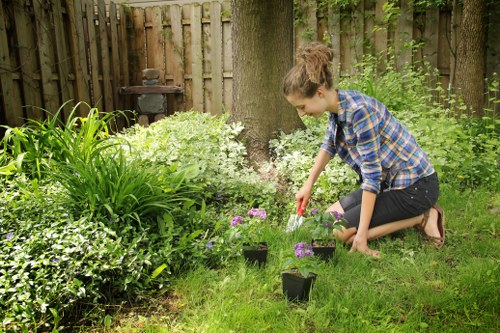 In summary, our commitment to a sustainable rubbish gardening area combines measurable targets, borough-aligned waste separation, partnerships with charities and community organisations, and a low-carbon transport strategy. By aiming for a high recycling percentage target and using local transfer stations, we reduce haul miles and emissions. Gardeners in Hornsey who choose our services support a practical, circular approach to garden waste that protects local green spaces, benefits community projects, and helps the borough move toward greener, cleaner streets.

